How to Protect Your Smile: Post-Thanksgiving Tooth Care
Post-Thanksgiving tooth care helps protect your smile after sugary desserts, sticky treats, acidic drinks, and heavier meals. Rinse with water, brush gently with fluoride toothpaste, clean between teeth, and watch for lingering sensitivity or pain. These simple steps can reduce plaque, protect enamel, and help you know when to call a dentist.

Why does post-Thanksgiving tooth care matter?
Holiday foods can leave behind sugar, starch, and acids that feed cavity-causing bacteria. Caramel, dried fruit, taffy, and other sticky treats may cling to teeth longer than softer foods. Wine, soda, cranberry sauce, and citrus-based desserts can also temporarily soften enamel.
That does not mean you must avoid every favorite dish. A consistent cleanup routine after the holiday helps limit exposure and keeps your mouth feeling fresh.
What should you do after eating holiday sweets?
Follow these practical steps:
- Drink water. Rinse away food particles and dilute acids after eating. Water is especially helpful when brushing is not immediately convenient.
- Wait before brushing. After acidic foods or drinks, wait about 30 minutes before brushing so softened enamel has time to recover.
- Brush gently. Use a soft-bristled toothbrush and fluoride toothpaste for two minutes, reaching the gumline and every tooth surface.
- Clean between teeth. Floss or use an interdental cleaner to remove food trapped between teeth, around bridges, and near the gums.
- Choose smart snacks. If you are still grazing, select cheese, plain yogurt, vegetables, or nuts instead of repeatedly eating sticky sweets.
For a broader overview of preventive care, visit our General Dentistry page.
How can you manage sensitive teeth after Thanksgiving?
Sensitivity to cold drinks, hot foods, or sweets may happen when enamel is worn, gums have receded, or a tooth has a cavity or crack. Try these measures:
- Use toothpaste designed for sensitive teeth consistently; relief may take several applications.
- Avoid very hot, cold, acidic, or sugary foods for a few days.
- Brush with light pressure rather than scrubbing.
- Use lukewarm water and a soft toothbrush.
- Do not place aspirin directly on a tooth or gum, as it can irritate tissue.
Occasional, brief sensitivity that quickly fades may improve with gentle care. Sensitivity that persists, worsens, or affects one specific tooth deserves professional attention.
A simple holiday recovery routine
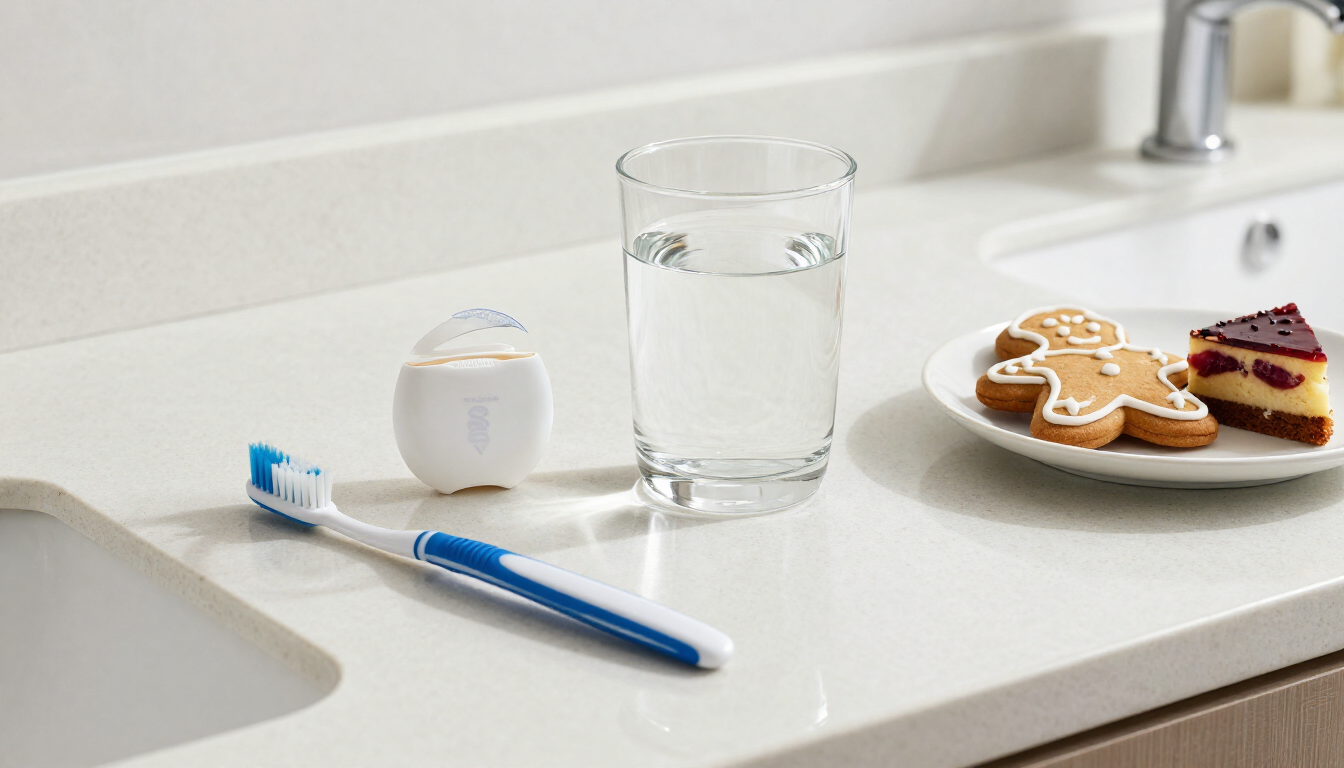
For the next several days, return to a dependable routine:
- Brush twice daily with fluoride toothpaste.
- Floss or clean between teeth once daily.
- Drink water regularly, especially between meals.
- Limit frequent snacking on sweets and sipping sugary beverages.
- Keep regular dental visits so small problems can be found early.
If you wear a nightguard or clench your teeth, holiday stress and tougher foods may increase jaw tension. Learn more about protecting your teeth with Nightguards & Occlusal Guards .
When should you call the dentist?
Contact a dental office if you notice severe or lasting tooth pain, swelling, a broken tooth, pain when biting, bleeding that does not improve, fever, or sensitivity that continues after changing your routine. Sudden facial swelling or trouble breathing requires urgent medical attention.
A dentist can determine whether symptoms come from a cavity, cracked tooth, gum concern, worn enamel, or another issue. Request an appointment through our Contact page if you are concerned.
Key takeaways
Post-Thanksgiving tooth care is mostly about reducing how long sugar and acid remain on your teeth. Rinse with water, wait before brushing after acidic foods, then brush gently and clean between your teeth. Manage sensitivity with gentler habits and sensitivity toothpaste, but do not ignore persistent or one-sided symptoms. If pain, swelling, a broken tooth, or ongoing sensitivity appears, contact a dentist promptly. A short return to consistent daily care can help your smile recover comfortably after holiday feasting.
Share this article